


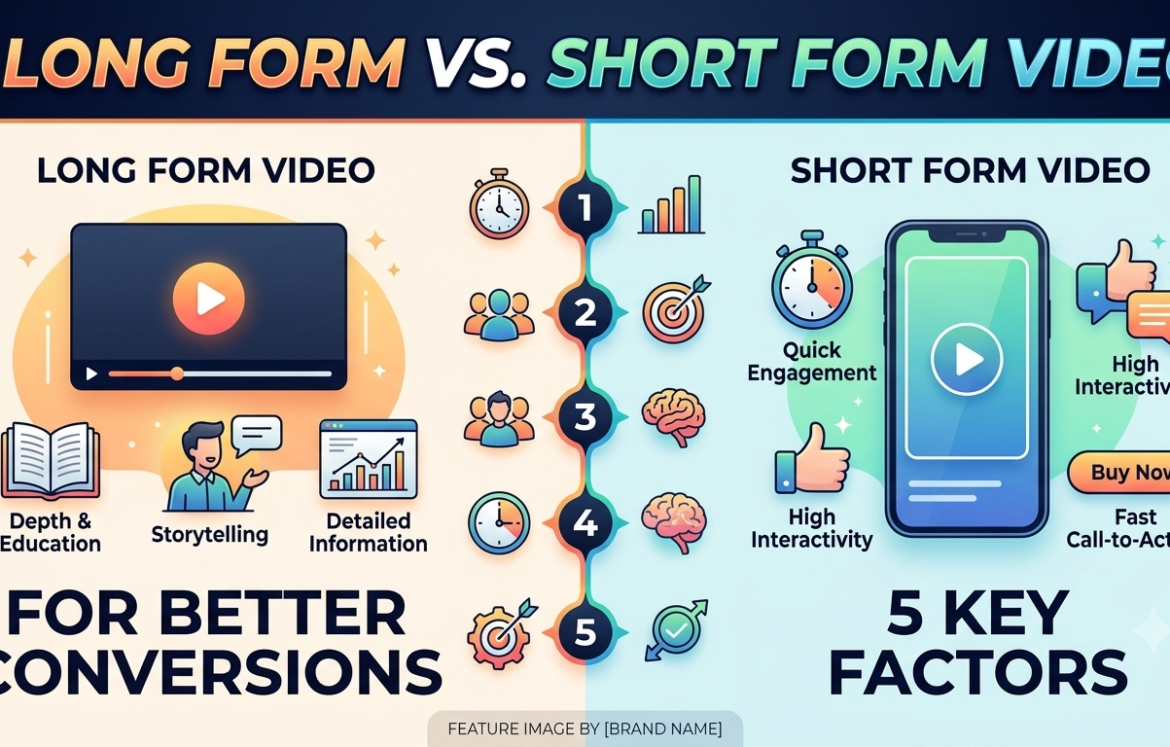
Long Form vs. Short Form Video: 5 Factors for Better Conversions?
If you have been on the internet at all in the last few days you have probably seen one thing:
Short-form video is ubiquitous:-
People are consuming content faster than ever – from scrolling through TikTok on their lunch breaks to watching countless Instagram Reels before bed. Long-form blogs, podcasts, webinars and in-depth videos are still driving traffic, developing trust and earning substantial income for organisations.
So of course marketers and business owners are always asking:
“Which content format converts better — short-form video or long-form content?”
The answer is not as simple as most people believe – Because the reality is, both models work well, albeit in different ways.Let’s put it in plain English.
Why Short-Form Video Seems So Powerful
There’s a reason short form video took off so fast. It’s the perfect fit for the way people consume content today – quick, graphic and mobile-first.
Most users are not going to read a 2,000 word essay while waiting in queue for coffee. They want fast entertainment, immediate tips, fast replies. And that is precisely what short form videos give.
A 20 second clip can:
- Grab attention immediately
- Evoke emotions
- Provide a brief overview
- Showcase a product
- Make somebody inquisitive enough to click
And honestly, that’s really powerful. One viral video can rack up thousands, even millions, of views overnight. It’s hard for brands, creators and enterprises to ignore that type of reach.
But Here’s the Catch…
A video might garner a lot of attention but that doesn’t guarantee consumers trust the business enough to instantly buy something. That’s where a lot of firms get stuck.
They pursue trends, they chase viral sounds, they chase fast content wins – but forget that customers still require trust before making big judgements.
Trust doesn’t build in 30 seconds. That’s the purpose of long-form content.
You may also read this blog of Grow on Instagram
Why Long-Form Content Still Does So Well
Even in an era with short attention spans, people still do their homework before they buy. Consider your behaviour.
If you buy:
- Costly software
- Coaching programme
- Financial services and finance
- A product for skin
- A fitness program
- A marketing service
you probably want to know more first.
- You will read reviews.
- You will assess options.
- You will watch tutorials.
- You will look for answers.
That’s why long-form content continues to convert so well. A comprehensive blog post, case study, webinar or YouTube video builds confidence in people. And most significantly – it allows people to feel confident in making a decision.
Short-Form Video Grabs Attention
If we’re being practical, short form video is great at one thing:
How to get people to stop scrolling.
That is a big deal in today’s congested online world.
A good short video makes:
- Curiosity
- Sensation
- Enthusiasm
- urgent
It is ideal for:
- Discovering products
- Awareness of brand
- Expansion of social media
- Rapid engagement
- Impulse purchasing
That’s why so many brands are investing big on short-form content right now. Fast working.
Long-form content builds trust.
Now let’s discuss what happens when someone takes an interest in you. Because you can’t pay the bills with attention alone.
Long form content helps move people from:
“Hmmm, this looks interesting…
to
“Okay. I’ll trust this brand.”
That change is meaningful.
Detailed content enables you to:
- Explain how you do it
- Use real-world examples
- Inform your audience
- Respond to objections
- Show expertise
And that’s usually what leads to conversions – especially for high-value products or services.
So… Which converts best?
Really? They both do.
But they convert differently depending on where your audience is in the customer journey.
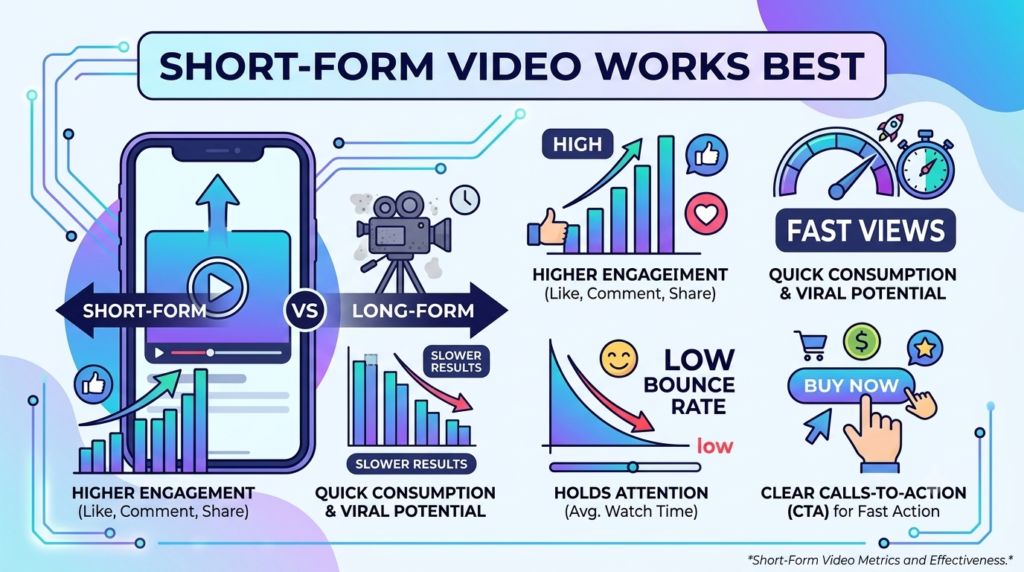
For Whom Short-Form Video Works Best:
- Rapidly attracting attention
- Engagement with social media
- Engaging new audiences
- Making viral moments
- Driving impulse purchases at low price points
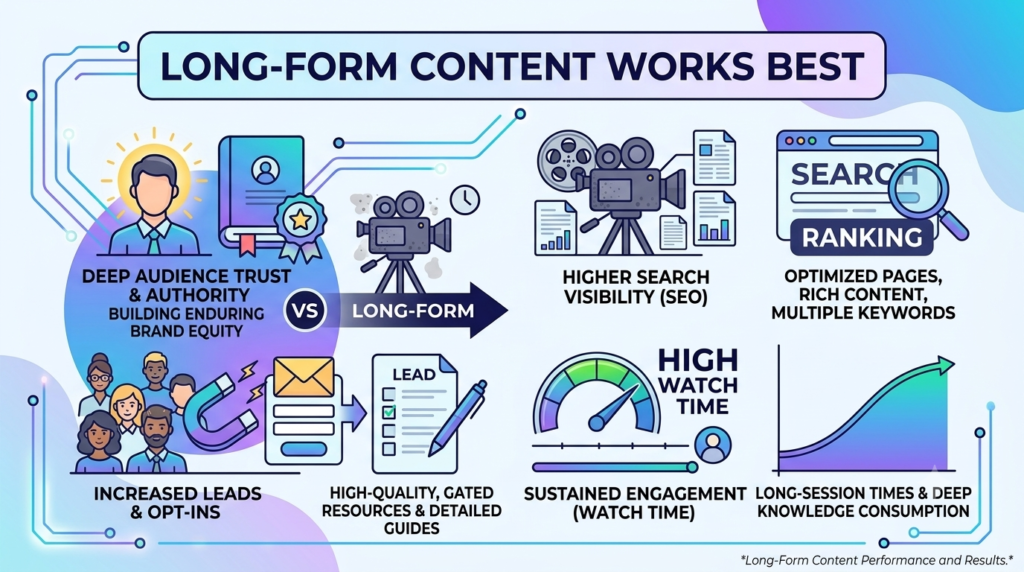
When Long-Form Content Works Best For:
- Claiming authority
- Search engines ranking
- Generating and qualifying leads
- Offering costly services
- Educating potential purchasers
- Establishing trust with customers
That’s why savvy brands don’t choose one or the other. They do both.
The Best Strategy Is To Use Them All Together
Typically, these are the strongest marketing funnels:
Step 1: Attract People with Short Form Video
Make short videos that:
- Fix a small bug
- Reveal a shocking fact Highlight a pain point
- Show a quick result
The goal is simple: Get noticed.
Step 2: Send People to Long Form Content
If someone is interested, refer them to:
- A blog entry
- A video on Youtube
- Webinar A page to opt in
- The complete guide
Now you’re offering them depth, not simply amusement.
Step 3: Build Trust & Convert
That’s where long-form material performs the heavy lifting. By the time someone has finished reading or viewing, they know:
- Who are you
- Your offering
- Why it matters
- Why they should believe you
That’s what sells.
A Simple Example from the Real World
Imagine a fitness coach publishes a short video titled:
“3 mistakes preventing you from losing belly fat.”
That video gets your attention immediately.
But the true conversion comes when visitors click on to:
- A comprehensive exercise manual
- An essay on nutrition
- Transformation: a case study
- A coaching programme
The gateway is the short-form content. The long-form content is what sells.