



What is E-E-A-T and How to Build Up Your Online Authority?
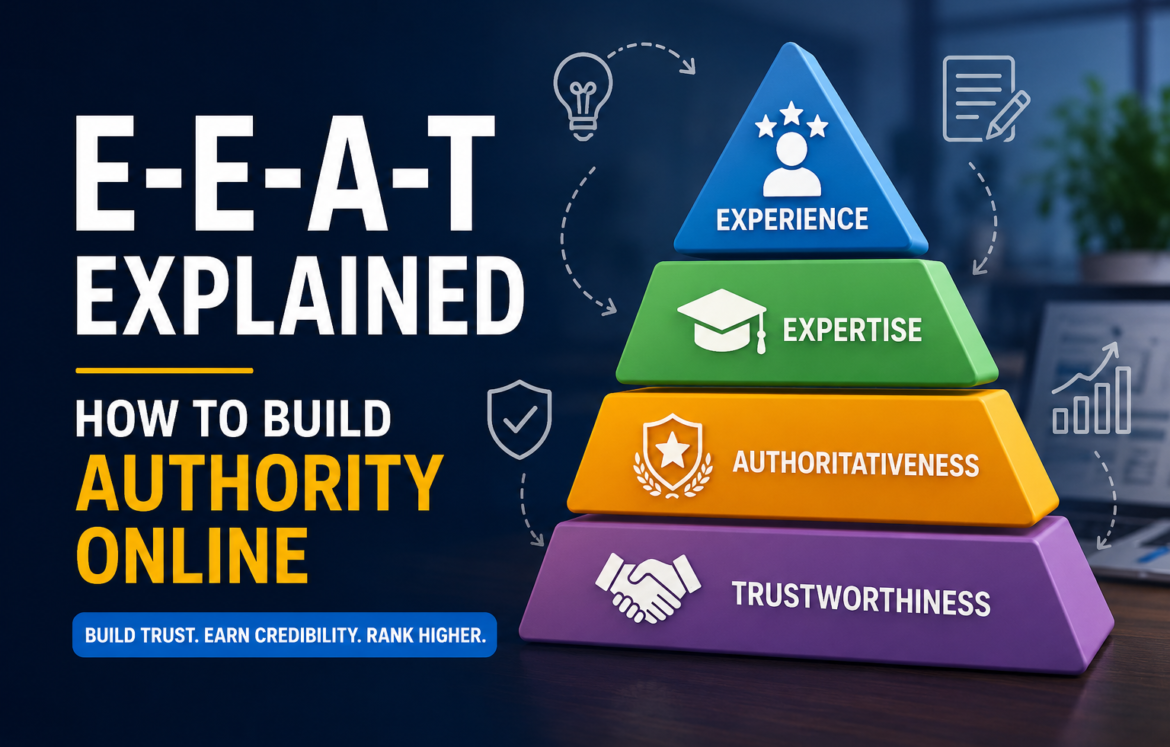
Content alone is not enough in today’s digital environment. Millions of blog postings are jostling for attention every day but only a handful of those will acquire regular search engine traffic. It stands for Experience, Expertise, Authoritativeness and Trustworthiness (E-E-A-T).
E-E-A-T is something any blogger, business owner, freelancer or digital marketer needs to master to dramatically improve the credibility of their website and long-term SEO performance.In this comprehensive tutorial you will learn what E-E-A-T is, why it is important and how to build real authority online with practical strategies.
What is EEAT? (More on EEAT)
E-E-A-T is an acronym standing for Experience, Expertise, Authoritativeness and trustworthiness. It is a core quality framework within Google’s Search Quality Evaluator Guidelines that human reviewers use to assess the credibility and overall helpfulness of web content.
For example: 1.
A travel blogger traveling in Japan is sending out a stronger signal than someone re-writing stuff from other websites.
Similarly, an investment advisor who shares knowledge from years of experience has higher E-E-A-T than anonymous AI-generated information that has not been reviewed by any human.
The Four Pillars of E-E-A-T, Explained:
1. Experience :-Experience is about hands – on involvement. Google wants content supplied by people who have truly experience in any matter.
- Used the product
- Visited location
- Got the job done
- Tried the service.
- Problem fixed .
For example-
Instead of the word:
“The battery life on this camera is outstanding.”
A more powerful version:
“I’ve been using this camera outdoors for photo sessions for the last 6 months and I always end up with more than 800 images on one charge.”
Here is the second example, which is a real experience.

2. Expertise:-Expertise is superior knowledge or skill in a particular domain.
For technical topics such as:
- Engineering
- Cyber Security
- Law
- Healthcare
- Finance
Google likes content from people who are specialists, who are authorities in their field.

How to show you are an expert:
- Degrees
- Certifications
- Industry Experience
- Research
- Professional Achievements
- Detailed explanations
3. Authoritativeness:- Authority is about reputation. Even experts have to earn confidence throughout the web.
Google consider signals such as:
- References to authoritative sites
- Quality backlinks high
- Media coverage
- Guest Post
- Guest Speaking Appearances
- Industry Award
- Positive Brand Recognition
“Look at authority as what other people say about you, not what you say about yourself.”

4. Trustworthiness :-Trust is the most important ingredient in EEAT. This is the centerpiece of framework. If information safe, honest and accurate then Trust requires clear sourcing, secure website(HTTPS) and transparency about who wrote the content.Experience and knowledge are useful only when they are dependable.
What a trustworthy website usually has:
- Fact data
- With Clear Authorship
- Contact details
- Privacy Statement
- HTTPS security
- Genuine reviews of products
- Source clear
- Regular content updates
Sites that users and search engines can trust.

You may read this blog of Long Form vs. Short Form Video
Why E-E-A-T Matters for SEO?
While E-E-A-T is not a direct ranking criteria, it’s a big part of how Google’s algorithms evaluate content quality.
High E-E-A-T content typically results in:
- Higher search rankings
- More natural traffic
- Better click through rates
- Increased user interaction
- External links more.
- More credibility for the brand
- High conversions rate
Google’s mission is simple: Give the best dependable answer to each search query.
How To Gain Experience ?
Authentic encounters create all original content that competitors can’t easily duplicate.
Here are some of the good ways:
Share Personal Experiences
Discuss :-
- What we discovered
- Mistakes done
- Success stories
- Practical challenges
Authentic experiences establish deeper ties with your readers.
Include Original Pictures
Not stock images, but :-
- Product photography
- Take Screenshots
- Share project findings
- Add before and after comparisons
First hand experience, backed by creative images.
Publish Case Studies
We’ve got case studies to prove it.
List:
- Objectives
- Process
- Challenges
- Metrics
- Results
Readers believe in data-driven experiences.
How to Show Expertise
In-depth content In-depth content In-depth content : “Write deep dives, not superficial pieces.”
Instead of:
“10 SEO Tips”
Write:
“Small Business Technical SEO Checklist”
Often, long-form, well-structured information does better.
Use Reputable Sources –
Back up your statements with:
- Research in academia
- Government publications
- Market reports
- Studies that have been peer-reviewed
Accurate citations strengthen credibility.
Keep Content update – Lack of knowledge undermines expertise.
Reviewed routinely by:
- Updating statistics
- Refreshing examples
- Repairing broken links
- New developments
Updated content demonstrates continued competence.
How to Establish Your Authority Online ?
Authority takes time to build. Here are ways that have been proved.
1. Earn Quality Backlinks : Focus on links from high-quality websites.
Methods:
- Guest blogging
- Original research
- Infographics
- Data studies
- Digital PR
Quality always beats quantity.
2. Build a recognizable Brand :
Ensure uniformity across:
- Social media
- Website
- Emails Newsletters
- Podcasts
- YouTube
Brand recognition adds to the credibility.
3. Publish Original Research :
Unique data naturally draws:
- Bloggers
- Journalists
- Researchers
Usually, original stats get high-ranking backlinks.
4. Present at industry events :
Participants :-
- Conferences
- Podcasts
- Webinars
- Workshops
Public speaking establishes professional reputation.
How to Improve Trustworthiness ?
Trust can be strengthened through transparency.
Include:
Author Bio – Every article should explicitly identify:
- Author
- Qualifications
- Experience
- Professional background
Readers appreciate knowing who created the content.
Contact Information – Provide:
- Email address
- Contact page
- Business address (if applicable)
- Customer support
Accessible businesses seem more trustable.
Safe Website – Always use:
- HTTPS
- SSL certificates
- Secure payment gateways
Website security protects users and builds confidence.
Honest Reviews – Never exaggerate product claims.
Discuss both:
- Pros
- Cons
- Limitations
- Alternatives
Balanced reviews earn greater trust than overly promotional content.
Common E-E-A-T Mistakes
Avoid these pitfalls.
Publishing AI Content Without Human Review :- AI can assist with drafting, but content should always be fact-checked, edited, and enriched with original insights.
No Author Information :- Anonymous content often appears less trustworthy. Include author profiles wherever possible.
Thin Content :- Articles with minimal value rarely establish expertise. Aim for depth, originality, and practical usefulness.
Outdated Articles :- Old statistics and obsolete recommendations reduce credibility. Schedule periodic content audits.
Clickbait Headlines :- Misleading titles may increase clicks temporarily but damage long-term trust.
Best Practices Checklist
Use this checklist before publishing any article:
- Demonstrates firsthand experience
- Includes expert insights
- Uses reliable sources
- Has a clear author bio
- Contains original images or examples
- Is factually accurate
- Is regularly updated
- Has secure HTTPS
- Provides contact information
- Solves user problems comprehensively
Meeting these criteria strengthens your E-E-A-T profile over time.
The Future of E-E-A-T
As AI-generated content becomes more widespread, authentic human experience will become even more valuable.
Google continues refining its systems to reward:
- Original insights
- Real-world expertise
- Trustworthy publishers
- Helpful content
- Transparent authorship
Websites investing in quality rather than shortcuts are more likely to achieve sustainable search visibility.
Frequently Asked Questions (FAQs)
Is E-E-A-T a Google ranking factor?
E-E-A-T is not a direct ranking factor, but Google’s quality evaluation systems use these concepts to assess the overall usefulness and credibility of content, which can influence search performance.
What does the extra “E” in E-E-A-T stand for?
The additional “E” stands for Experience, highlighting the importance of firsthand knowledge and real-world use of a topic.
How can beginners build E-E-A-T?
Start by sharing authentic experiences, publishing accurate and in-depth content, creating an author bio, citing trustworthy sources, and consistently updating your articles.
Does E-E-A-T matter for every website?
Yes, although it is especially important for websites covering health, finance, legal, and other topics where inaccurate information could significantly affect people’s lives.
How long does it take to build authority online?
Building authority is a gradual process. With consistent, high-quality publishing, genuine expertise, and a strong reputation, meaningful results often develop over several months to a few years, depending on your niche and competition.